
Pet Weight Loss Programs
Help your pet lose weight, safely and under veterinary supervision

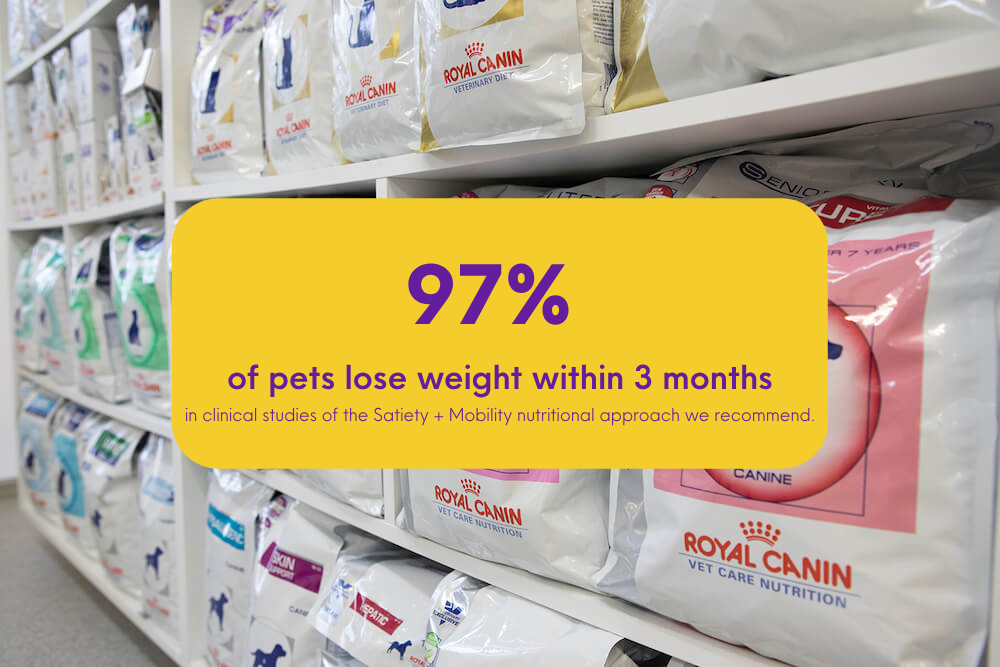
Extra weight puts real strain on your pet’s joints, energy and long-term health. Our program starts with a full physical exam to rule out any medical cause, then a tailored plan built around Royal Canin’s clinically proven Satiety + Mobility diet.
Why Your Pet’s Weight Matters
Your pet being overweight doesn’t just affect how your pet looks, it raises the risk of arthritis, diabetes, heart disease and breathing problems, and it can be harder to spot in cats, who tend to hide discomfort well.
- of dogs with osteoarthritis are also overweight or obese 52%
- of cats and dogs in Australia are classified as overweight or obese 60%
- of cats with osteoarthritis are also overweight or obese 41%
A Diet Backed By Clinical Research
We recommend Royal Canin’s veterinary-exclusive Satiety + Mobility range, developed through the Royal Canin Clinical Alliance, for pets who need to lose weight and support their joints at the same time.
- Effective, lasting weight loss – A low-calorie formula designed to help your pet lose weight and keep it off, rather than regain it once the diet stops.
- Less begging between meals: A higher level of selected fibres helps pets feel satisfied for longer. In clinical studies, this reduced begging in 83% of dogs and 82% of cats during weight loss.
- Support for comfortable movement: Losing weight takes pressure off joints on its own, and this diet is formulated to support mobility alongside the weight loss itself.
- Joint support built in: Green-lipped mussel and a high level of omega-3 fatty acids (EPA and DHA) help maintain healthy joints, particularly useful for older or arthritic pets.
Why Your Pet’s Weight Matters
We start with an exam, then build a plan around your pet’s breed, age, and body condition, and check in with you regularly to keep it on track.
- Physical exam first: We check for underlying medical conditions, such as thyroid or joint issues, that could be contributing to the weight gain.
- Body condition assessment: We establish your pet’s starting point and set a realistic, healthy target weight.
- Canin Satiety + Mobility diet: A clinically proven weight-loss diet with added joint support, tailored to your pet’s needs.
- Regular weigh-ins and maintenance: Regular weigh-ins to track progress, then a maintenance plan once the target weight is reached.
Common Questions About Pet Weight Management
How do I know if my pet is overweight?
Run your hands along your pet's sides. You should be able to feel their ribs without pressing hard. If you can't, or if your pet has lost their waistline when viewed from above, they may be carrying excess weight. Our team can do a proper body condition assessment at your next visit.
How much should I be feeding my pet?
It depends on their species, breed, age, activity level, and whether they're desexed. The feeding guides on pet food packaging are a starting point, but they're often generous. We can help you work out the right amount for your pet's specific needs.
Are treats making my pet fat?
They can. Treats, table scraps, and dental chews all add up. In a small dog, even a few extra treats a day can be the equivalent of an extra meal. We can suggest lower-calorie alternatives and help you factor treats into your pet's daily intake.
Is it harder for desexed pets to lose weight?
Desexing can lower your pet's metabolism, which means they may need less food than before. This is manageable with the right diet and portion control. It's not a reason to avoid desexing, but it is something to be aware of.
How long will it take for my pet to lose weight?
Safe weight loss is gradual. We typically aim for a loss of 1 to 2% of body weight per week. Crash diets aren't safe for pets, especially cats, where rapid weight loss can cause serious liver problems. We'll set a realistic timeline and track progress with regular check-ins.
Can I just cut back on food instead of changing diets?
Simply feeding less of a regular diet can mean your pet misses out on essential nutrients. Weight management diets are formulated to be lower in calories while still providing complete nutrition, so your pet feels satisfied and stays healthy while losing weight.
Why does my pet need a special weight loss diet instead of just less regular food?
We recommend Royal Canin's Satiety + Mobility range because it's clinically proven, not just marketed as a diet food. It's higher in fibre, which helps pets feel satisfied rather than begging, and it includes joint support for pets whose weight is affecting their mobility.
Call 02 9545 2100 now to book an appointment with our highly trained veterinarians and vet nurses today!